The Private Field Diary of Scholar Mikkelious Nimblewink
Senior Researcher, Phenomenal Textures and Dream-Responsive Flora | Member of the MirMarnian Biscuit Society (Northern Chapter)
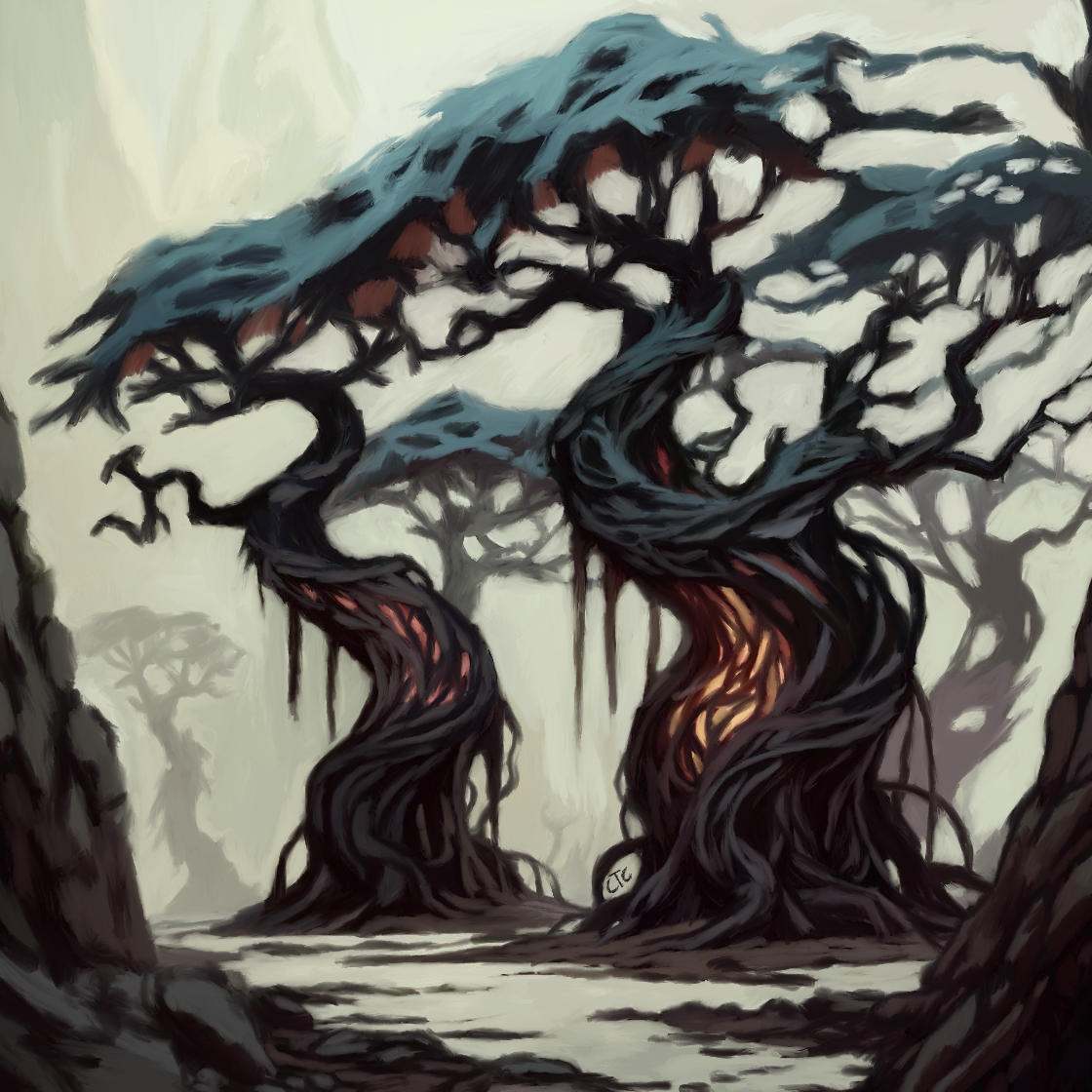
(I painted this in Procreate using the oil paint brush and HB pencil - Chaiga T. Cheska)
~~~
(“Ode to the Oaty Sharp Snap” was written and put to song in Suno by Chaiga T. Cheska)
~~
Day Three. Northern Skyfall Plains.
The Starflax sample arrived this morning wrapped in oilcloth and humming at a frequency I can only describe as self-satisfied. I unwrapped it carefully, as the literature recommends, and it immediately brightened and produced a brief luminous impression of me dropping my field satchel into the river yesterday, which I had hoped no one had witnessed.
The fibre witnessed it. The fibre remembers everything. I have written this in large letters at the front of my notebook as a reminder to conduct myself with dignity at all times in its presence, which will be difficult because dignity and fieldwork have never, in my experience, occupied the same space comfortably.
My new field assistant arrived this afternoon. Miss Mary Sponge. She has a degree, a field research diploma, and the expression of someone who has been promised more than this. She looked at my camp setup, looked at the Starflax humming cheerfully on the specimen table, looked at me, and wrote something in her notebook. I did not ask what. We are going to get along perfectly well, I think. Or we are not. Field assignments of six months tend to go one way or the other.
I gave her a Velvet Rose biscuit from my personal supply as a gesture of professional goodwill. She accepted it without comment. I consider this a promising start.
Day Seven. Northern Skyfall Plains.
Extraordinary morning with the Starflax. I was conducting a routine tensile test when the fibre brightened suddenly and projected, at considerable size, a memory of my presentation to the Institute’s Board last spring, specifically the moment the shawl sample I was demonstrating became wrapped around my left arm during what I had intended to be an elegant display of its flexibility, and I spun round twice and knocked the inkwell onto Dr Henwick’s notes.
The Starflax held the image for a generous interval. Miss Sponge watched from the other side of the specimen table and said, “Does it do that often?”
I told her it did, and that one simply developed a working relationship with the material and its editorial tendencies. She wrote something in her notebook. I have begun to find her notebook faintly threatening.
On a separate and entirely unrelated note, I received this month’s agenda from the Biscuit Society. Pimble Devlin is proposing a motion to reclassify the Oaty Sharp Snap as a biscuit of regional significance, which I support wholeheartedly. The Oaty Sharp Snap has exceptional structural integrity, a clean snap with no crumbling, and a depth of flavour that I once attempted to capture in a song, which the Society received with considerable enthusiasm. Only three verses. I may revise it for the next meeting. The second verse needs work. Miss Sponge walked past whilst I was humming the revision and gave me a look I could not completely interpret.
Day Twelve. The Whispering Copse. First night.
I set up camp at the edge of the Dreamwood grove as the light was going. I want to record my first impression of the trees because first impressions of Dreamwood matter; subsequent impressions are influenced by whatever one dreams, and I have learned not to trust them as objective data.
The grove is dense and very old. The trunks are dark and deeply grained, twisted through years of responding to the dreams of whoever has slept nearby, and the canopy presses together overhead in a way that lets very little sky through. At the base of each tree, where the roots surface and dive back under the ground, there is a faint warmth in the bark. Not heat, exactly. More like the memory of heat. A glow sitting deep in the grain, amber and rust-coloured, the kind of light that a fire leaves in wood long after the fire itself is out.
I found it beautiful at first.
I found it beautiful for perhaps four minutes, until I registered that the glow was not distributed evenly, that it pooled and shifted in patterns that suggested the tree was not remembering warmth but something else, something that had burned and was still burning somewhere inside the grain, slow and patient and very much present.
At which point I put the kettle on and thought about biscuits as one does in such circumstances.
Specifically, I found myself thinking about the oatmeal rounds I discovered at a small provisions stall in Mirhaven, three summers ago, which were made with something that tasted of heather honey and had a texture that yielded slowly rather than snapping, substantial without being hard, the sort of biscuit that rewards attention. I had written a short piece about them for the Society’s quarterly bulletin. Maeloc Brinehallow, our treasurer, had described the bulletin piece as “unexpectedly moving.” I am still faintly chuffed about that.
The trees glowed. I drank my tea. Miss Sponge arrived back from her perimeter notes and sat down across from me and said, “You’re staring at them.”
I told her I was conducting observations.
She poured herself a cup of tea and looked at the trees, and then looked at me and said, “They glow.”
I reflected and agreed that they did.
She wrote in her notebook for a while. I hummed the oatmeal round piece quietly to myself. The nearest tree’s canopy shifted, just slightly, in a direction that had nothing to do with the wind.
Day Thirteen. The Whispering Copse.
I should not have camped so close.
I dreamed of the Pitchmere Caverns, which I had visited the previous autumn and which have featured in my sleeping mind with depressing regularity ever since. In the dream, the torches went out, as they do, and the darkness came forward, as it does, and I was looking for the exit and finding only more dark in every direction, which is the standard architecture of that particular dream and requires no further analysis.
When I woke, the nearest Dreamwood had produced, overnight, a new growth on its eastern side: a dense knotting of branches at roughly head height, curved inward, too many of them, pressing together into a shape that I will describe in my field notes as irregular and leave it at that.
It creaked when I looked at it.
It went still when I looked away.
I ate two biscuits for breakfast. I had been saving a sleeve of Pimble Devlin’s Oaty Sharp Snaps for a special occasion, but I feel a man is entitled to revise his definition of special occasion in the field. Clean snap. Excellent depth. I sang the first verse of my Oaty sharp snap composition quietly into my tea and felt considerably better.
Miss Sponge emerged from her tent, observed the new growth on the eastern Dreamwood, wrote in her notebook for four minutes, and then looked at me and said, “What did you dream about?”
I told her the research was progressing well and offered her a biscuit. She took it. She has not mentioned the biscuit song. I choose to interpret this as professional discretion.
Day Fourteen. Pitchmere Hollow. Evening.
I strayed into the nightmare grove by mistake, which I am recording here because accuracy matters and because if I do not write it down, I will spend the rest of this assignment trying to forget it and failing.
The Pitchmere Hollow Dreamwood had been receiving bad dreams for a very long time. The trunks were black and tightly wound, bark knotted from root to canopy, the trailing root-ends at the base spread wide and low like hands pressed flat against the ground. The internal glow I had observed in the Whispering Copse grove was, in this place, a deep, unhealthy amber, the colour of something that had been left burning too long, pulsing slowly in the grain. The canopy pressed down. The air was a specific cool of a place where the light does not reach.
My lantern dimmed the moment I stepped beneath the outer trees. It did not go out. It simply became less certain of itself, which I found, if anything, worse.
I stood there for a moment. The trees were very still. The glow in the nearest trunk shifted, pooled, spread toward me along the root line like slow water, and I stood watching it do that and thought, clearly and without drama, that I would like very much to leave.
I could not leave immediately because my boot had caught on a root.
So I sang, which I feel was the most sensible course of action.
I sang the oatmeal round piece, all three verses, including the middle verse, which I know needs revision but which serves well enough in an emergency. The moss at my feet, pale and dense and covering the ground between the roots, began to pulse in time. A slow, soft light gathered in it, gold rather than amber, moving upward through the stems. The lantern steadied. The root that had caught my boot loosened, or I imagined it did, and I walked out of the grove with a dignity I will maintain I had throughout.
I told Miss Sponge what had happened. She looked at me for a long moment and said, “The moss glowed.”
I said that it had.
She said, “Because you sang.”
I said that appeared to be the mechanism, yes.
She wrote in her notebook for quite a long time. I made tea. I was very glad to make tea. I am a man who has always found the kettle a reliable companion in difficult circumstances, along with a good biscuit, and I sat with both of them for the remainder of that evening and did not go back into the hollow, which I consider a sound scientific decision as well as a personal one.
Day Twenty-Seven. The Whispering Copse. The fog.
Fog came in off the plains around sundown and settled thick between the Dreamwood trunks. Miss Sponge had gone to check the specimen cases, and I was alone with a cluster of young saplings, no taller than my shoulder, their bark still smooth and pale.
The fog thickened. The light went grey and directionless. A sapling to my left began to develop, visibly, a new branch curving inward at its tip, which meant someone nearby was dreaming something they would rather not be, and since Miss Sponge was fifty yards away checking specimen cases and I was the only one present, I had a reasonable hypothesis about whose dream it was reflecting.
So of course I sang. The shortbread piece, which I had been developing for the Society and which has a rather satisfying confident chorus. The saplings joined in. I want to be precise about this because it sounds improbable and the record deserves precision: the branches began tapping a rhythm against one another, the leaves rustled in a pattern that was not the wind, and the sapling on my right produced a low resonant hum from somewhere deep in its trunk that sat beneath the melody as solidly as any bass line I have heard at the Society’s annual recital.
The fog lifted. The saplings stood still. The new branch on the sapling to my left had uncurled.
I stood there in the clearing for a long moment, breathing the cool evening air, thinking about what had just happened. The shortbread piece has four verses and a repeat of the chorus, and I had sung all of them, and the trees had held the rhythm throughout without missing a beat, which is more than can be said for Collan Ervane at last month’s Society meeting, who lost the second verse entirely and blamed the acoustics of my office.
Miss Sponge came back and found me still standing in the clearing. She looked at the saplings. She looked at me. She said, “Did something happen?”
I told her the Dreamwood had demonstrated a significant responsiveness to musical frequency and that I had useful data for the field report.
She looked at the saplings for another moment, and then she looked at me, and something crossed her face that she put away before I could identify it. She opened her notebook. I made a note of the bass line’s approximate pitch, which I intend to reproduce at the next Biscuit Society meeting as a point of musical interest.
Day Forty. The West Clearing. The Star-Bloom.
I have been putting off writing this entry because I am not sure my notes are equal to it.
I placed the Starflax sample at the base of the young Dreamwood sapling in the west clearing just before the light went. I had done this three times previously with inconclusive results, but the evening had the quality of a held breath, the air very still, the last of the daylight sitting low and gold across the grass, and I had a feeling I have learned, over thirty years of this work, to take seriously.
The Starflax began to hum. The new key, the one I had first heard in the Pitchmere dark during the oatmeal song, softer and warmer than its usual register, attentive in a way I find difficult to put into words but will attempt: the quality of someone who has been waiting a long time and has just heard, from a considerable distance, a sound they recognise.
The sapling’s branches inclined toward the fibre. Not dramatically. A sort of slow lean, the kind of movement you see only if you are watching for it and are patient enough to let it happen at its own pace. The bark at the base of the trunk smoothed slightly where the Starflax lay against it.
Then the sapling produced a bloom shaped like a star.
Small, pale, five-pointed, and luminous at the edges in the intricate way of Starflax itself, as though the tree had learned the glow from the fibre and was returning it. It opened slowly, over the space of perhaps ten minutes, and when it was fully open, the clearing smelled of something I have no name for, cold and sweet and very old, the smell of the sky at altitude, the smell of distances.
My lantern dimmed. I sang a quiet piece about velvet creams, which are the biscuits I find most reliably comforting in moments of genuine feeling, their softness a kindness, their simplicity an honesty. The lantern came back. The bloom remained.
I sat with it for a long time. Starflax holds the memory of the cosmos: the cold between stars, the long patience of deep space, light that has been travelling since before any of us existed. Dreamwood holds the memory of dreamers: the fears and the hopes and the ordinary interior life of sleeping minds. I have spent thirty years studying unusual materials, and I have never before placed two of them together and watched them recognise each other.
Because that is what this was. Recognition. The universe remembering outward, the dreaming mind remembering inward, and these two materials the place where those two directions find each other and produce, between them, something that has never existed before.
I am fifty years old. I have been studying materials that most of my colleagues considered too peculiar to be worth the trouble since I was twenty, and I have always believed that the most interesting things are the ones that take the longest to understand, and that patience is not a lesser quality than speed, it is the condition of certain kinds of discovery. I wrote that in my first field notebook, and I believe it still.
The bloom was there in the morning. Miss Sponge sketched it at dawn, bent over her notebook with her coat pulled around her against the cold, working with the careful attention she applies to everything. I made tea and did not disturb her.
I believe I have found something significant. I intend to continue.
The Private Field Diary of Miss Mary Sponge
Acting Field Assistant, Field Report No. 77
B.Sc. Unusual Materials, Dip. Field Research
Not intended for publication. Obviously.
Day Three.
My father has sent me to the Northern Skyfall Plains with a man who apologises to fibre.
I arrived at camp after seven hours of travel to find Scholar Nimblewink crouched over a specimen table talking to a piece of Starflax in a low, reassuring voice. He looked up, said “Ah, excellent, you’re here,” handed me a biscuit, and went back to the fibre.
I ate the biscuit because I was hungry and not for any other reason.
The Starflax hummed at me when I walked past it. The Scholar said this meant it was taking an interest. I have written DO NOT ENGAGE WITH THE FIBRE on the inside cover of my notebook, which I realise is an instruction I should not need to give myself, and yet here we are.
I have been in this department for eight years. I have two qualifications, more ideas than my father has any intention of using, and I am apparently now in a field on the Northern Skyfall Plains being assessed by a piece of luminous thread.
Day Seven.
The Starflax replayed the Scholar’s Board presentation disaster this morning at full size, in excellent detail, for an audience of two. The Scholar watched his own humiliation with the serenity of a man who has accepted his fate completely, which I find more unsettling than distress would have been.
He then received the Biscuit Society’s monthly agenda and read it with more focus than I have ever seen him apply to anything that wasn’t glowing.
I should explain the Biscuit Society, because if I do not write it here, I will have no one to tell and I will simply have to carry the knowledge alone. The MirMarnian Biscuit Society meets once a month in his office. Members travel from across MirMarnia. They sit in a circle and discuss biscuits. Their textures. Their structural properties. How eating them makes them feel. The Scholar writes songs about specific biscuits and performs them at these meetings, and the other members apparently receive these performances with enthusiasm.
He is the Northern Chapter Convener. There are other chapters apparently all over MirMarnia!
I have a degree. I have a diploma. I am thirty years old, and I spent three years at the Collegium studying for a career that was supposed to amount to more than documenting a grown man’s feelings about oatmeal.
Day Twelve. The Whispering Copse.
The Dreamwood grove is genuinely extraordinary, and I want to record that clearly before I record everything else, because everything else is going to make it hard to tell.
The trees are enormous and old, their trunks wound tight as rope, the bark layered and dense, and deep in the grain there is a glowing light. Amber and rust-red, shifting slowly, the kind of light that suggests the tree is still processing something it took in a long time ago and has not yet finished with. The canopy overhead is so thick it turns the air green. It is, objectively, one of the most remarkable groves I have encountered in eight years of departmental work.
The Scholar looked at the trees for four minutes and then made tea and started humming a song I assume is about biscuits again, and which I have now heard on six separate occasions and can reproduce from memory against my will.
He offered me a biscuit. I did enjoy it, irritatingly.
Day Thirteen.
I told him not to camp so close to the grove. He said he wanted proximity data.
He dreamed about dark places, and the nearest tree grew a large, horrible shape on its eastern side overnight, all knotted branches pressing together into something that creaks when you look directly at it and goes still the moment you look away. It has too many elbows. I have sketched it for the record, and I am not too glad I did.
He came out of his tent, looked at it, ate two biscuits in rapid succession without apparently noticing, and told me the research was progressing well.
I asked what he had dreamed about.
He offered me a biscuit. This man is so strange.
Day Fourteen. Pitchmere Hollow.
He wandered into a nightmare grove alone and without telling me, which is not in the field safety guidelines I was given, though I am beginning to think the field safety guidelines were not written with this particular scholar in mind.
He came back out singing about oatmeal. He’s so strange!
I am a professional. I checked the moss he described, documented the root formation and the canopy density and the quality of the internal glow in the trunks, which in the Pitchmere grove is a deep and thoroughly unpleasant amber, and I wrote all of it down correctly. The moss did show elevated luminescence. It faded over the morning. I measured it.
He made tea and sat with it, looking perfectly content, like a man who had been for a pleasant walk rather than a man who had got his boot caught on a root in a nightmare grove and sung himself out by lantern-light. I sat across from him and thought several things I am not going to write in this diary.
I pretended to listen to him talk about biscuits. I don’t know which ones. Just biscuits.
Day Twenty-Seven. The fog.
I was fifty yards away checking the specimen cases when the trees apparently sang back at him, which means I missed it completely, and I want it on record that I find this professionally frustrating rather than any other kind of frustrating.
When I got back to the clearing, he was standing in the middle of five Dreamwood saplings with his notebook open and an expression as if in the middle of a significant moment. The saplings were very still. One of them had grown a new branch since the morning, pointing straight up.
He told me the branches had kept rhythm and one tree had produced a bass line. I wrote it all down. The pitch, the duration, the specific sapling, the branch movement, the fog behaviour before and after. Every single thing, because that is what I do, and because if I do not write it down accurately, then the fact that I was fifty yards away checking specimen cases when it happened will matter rather more than it currently does.
He is making a note of the bass line pitch to share at the next Biscuit Society meeting.
Why is this man so obsessed with biscuits? He’s so strange!
Day Forty. The Star-Bloom.
He placed the Starflax at the base of the sapling at dusk and sat on the grass to watch, and I sat against an older tree with my notebook open because whatever I think of his methods, I know when something is about to happen.
The Starflax changed key. I heard it shift, the hum going softer and warmer, attentive in a way I cannot explain but can describe precisely: it sounded like recognition. The sapling’s branches moved toward the fibre in a slow lean. The bark at the base of the trunk smoothed.
Then the tree grew a bloom shaped exactly like a star.
I am recording the following facts in order because facts are what I have. The bloom was five-pointed and pale and luminous at the edges with the same cold light as the Starflax. It took approximately ten minutes to open fully. When open, the clearing smelled of altitude and cold distance and something I have no name for. The Scholar sat with his hands in his lap and did not move, and his face had the look of someone who has been right about something for thirty years and has just watched it prove itself in a field clearing at dusk.
His lantern dimmed. He sang a verse about biscuits, quietly, and the lantern came back. I wrote that down too.
I sketched the bloom twice. Once in full, once in close detail. I was cold, and the light was going, and I stayed until it was too dark to see the page because the sketch needed to be right and because I was not going to be fifty yards away a second time.
He found something significant! I know what it means, a bridge between cosmic memory and the memory of dreaming minds, these two materials, the point where they recognise each other, and I know it is important, and I wrote all of it down in my notebook in the cold and the dark whilst he made tea.
He handed me a cup when I came back to the fire. And a biscuit, of course. We sat in the clearing that still smelled faintly of the cosmos and drank our tea and did not say anything, because there was nothing adequate to say.
My indexing system would still improve the department considerably. I intend to raise it again when I get home.
I also intend to attend a Biscuit Society meeting. Purely for research purposes.
Author’s Note:
Can you tell I wanted biscuits while writing this? I hope you enjoyed this without getting too peckish!
-Chaiga T. Cheska