The Elvish Kindreds of MirMarnia
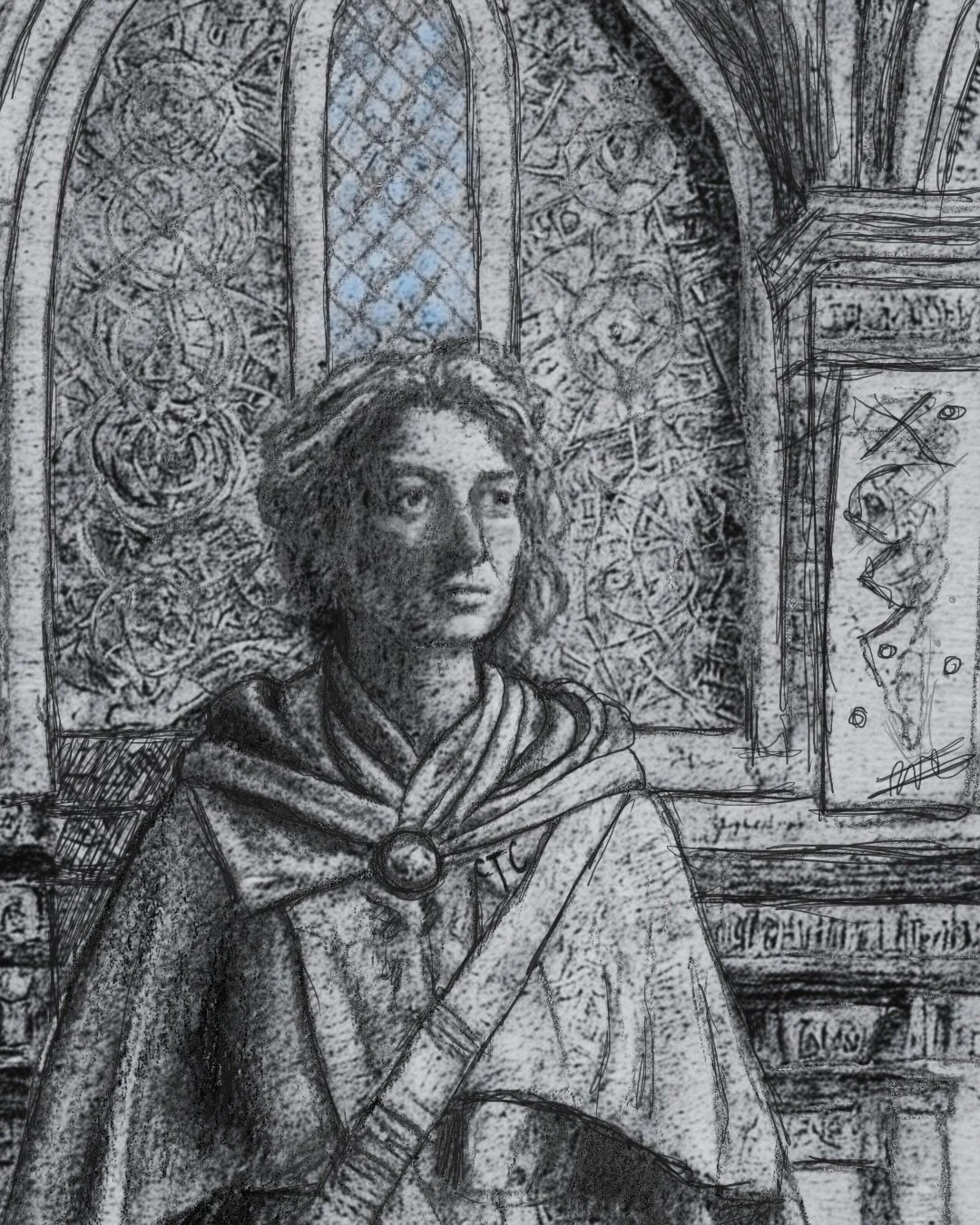
(I’ve created a soundscape for this post - Chaiga T Cheska)
A Comparative Study of Magical Manifestation Across the Five Kindreds
By Maerwynn of the Wandering Library, Scholar of Lineages and Keeper of the Cartulary of Living Things
Preface
I have spent the better part of thirty years travelling the breadth of MirMarnia with little more than my notebooks, a sturdy pair of boots, and what my mother generously called “an unhealthy fascination with people who would rather I left them alone.” The elves, bless them, have tolerated my presence with varying degrees of grace. Some have offered me tea. Others have threatened me with significantly sharper objects. Both responses, I have found, yield valuable scholarly insight, though I confess the tea was more pleasant.
What follows is an account of the five great Kindreds of MirMarnian elves: their territories, their magics, and the peculiar ways in which their children come into power. I have also included observations on half-elven manifestation, a subject often whispered about but rarely documented, as half-elven individuals tend not to announce themselves until their magic has already made rather a scene.
The Crystalsong Elves of the Eastern Reaches
Territory: The crystalline peaks and quartz valleys of the eastern mountains, where the stone sings at dawn and the light splits into colours that have no mortal names.
Character: If you wish to feel inadequate about your physical prowess, spend an afternoon with the Crystalsong Elves. They are warriors born, each movement precise as a blade’s edge, each gesture carrying the weight of centuries of martial discipline. They do not swagger. They do not need to. Their very presence suggests that they could kill you seventeen different ways before you’d finished your introduction, and they’d do it with impeccable posture.
Magic in Pure-Blooded Children: Crystalsong magic manifests early and dramatically. By the age of five, a Crystalsong child’s emotions produce audible resonance. Tantrums, I observed, can shatter wine glasses at twenty paces. (I lost three good goblets to a sulking six-year-old named Aerithan, who was displeased about bedtime.) Crystalline patterns appear on their skin when agitated, glowing with an inner light that pulses in time with their heartbeat. Their voices carry harmonic overtones; even ordinary speech sounds like the ringing of crystal bells. By adolescence, they can shatter stone with focused sound and sense structural weaknesses in any material by its resonance.
Magic in Half-Elven Descendants: In those of mixed blood, Crystalsong magic awakens far later, often in adolescence or during moments of great stress. The manifestation is subtler: a sharpening of the senses, particularly hearing and spatial awareness. Half-Crystalsong individuals report being able to feel vibrations through solid matter, to sense movement through walls, to gauge an opponent’s intent through the quality of their footfalls. The crystalline patterns rarely appear, and when they do, they are faint, more like watermarks than the blazing sigils of their pure-blooded kin. Their voices may carry a slight harmonic quality, though most mortals would not notice unless listening carefully.
Personal Observation: I once asked a Crystalsong elder why their people produced such formidable warriors. She looked at me as though I’d asked why water was wet, then said, “Because the mountains demand it.” When I pressed for elaboration, she added, “Also, we enjoy it.” Fair enough, I suppose.
The Rootward Elves of the Ancient Forests
Territory: The Eldertree Forest, the Sentinel Forest, and the deep groves where oak and ash have grown for millennia, their roots webbing beneath the earth like the veins of some vast, sleeping creature.
Character: The Rootward Elves have a patience that borders on geological. Conversations with them can span hours, punctuated by long silences that they seem to find perfectly comfortable whilst I shifted about awkwardly, wondering if I’d been forgotten. They have not forgotten. They are simply listening to something I cannot hear. Trees, apparently, are not quick conversationalists.
Magic in Pure-Blooded Children: Rootward children hear the voices of trees before they can properly walk. It is not speech as we understand it, but a deep, slow knowing that rises through the soil and into their small bones. I watched a three-year-old Rootward boy place his palm against an old oak and stand there, motionless, for the better part of an hour. When I asked what he was doing, he said, “Grandfather Oak is remembering the winter of the great frost. He’s almost finished.” Plants respond to Rootward children with uncanny awareness. Flowers turn to follow them. Vines reach out to steady their steps. Their fingertips often carry a faint green tinge, particularly after they’ve been touching living wood.
Magic in Half-Elven Descendants: Half-Rootward magic manifests as an intuitive understanding of plant properties and growth patterns. They may not hear the trees speak, but they know where to find medicinal herbs, which roots are edible, how to navigate a forest by its mood rather than its paths. They are drawn to natural spaces the way others are drawn to warm fires. Many become healers without formal training, their hands knowing which leaf to apply, which bark to brew, which flower to steep. The green tinge rarely appears, though some report that their touch encourages faster growth in seedlings.
Personal Observation: I made the mistake of rushing a Rootward elder once, suggesting we continue our interview at a brisker pace. She turned to me with an expression of such profound pity that I felt ashamed for weeks. “The forest will still be here when we are dust,” she said. “Why would we hurry?” I have since learned to bring a more comfortable cushion.
The Tidemark Elves of the River Valleys
Territory: The Emaris River and her countless tributaries, the delta marshlands, and the coastal estuaries where fresh water marries salt. They build their homes on stilts and floating platforms, structures that rise and fall with the water’s moods.
Character: Tidemark Elves possess a fluidity of temperament to match their element. They laugh easily, weep openly, and shift from joy to melancholy with the naturalness of water finding its level. Conversations with them meander like the rivers they love, circling back to earlier points, flowing into unexpected eddies of philosophy or poetry. I found them exhausting and delightful in equal measure.
Magic in Pure-Blooded Children: Water responds to Tidemark children as though it recognises kin. They can breathe beneath the surface for far longer than should be possible, their lungs adapted to extract air from water itself, though this ability fades somewhat in adulthood. Ripples form patterns where they touch a river, spirals and whorls that speak a language older than words. Their hair, when wet, takes on a silver-blue sheen, bright as fish scales. By adolescence, they can sense changes in current and depth, navigate in absolute darkness by feeling the water’s flow, and call fish to them with nothing more than patience and presence.
Magic in Half-Elven Descendants: Half-Tidemark individuals rarely breathe underwater, but they possess an uncanny understanding of currents and tides. They make natural sailors and fishermen, able to read the river’s mood in the quality of its surface, to sense storms hours before they arrive, to know where the fish are running without casting a line. Water trusts them; they do not slip on wet stone, do not lose their footing in swift current. The silver-blue sheen appears only rarely, usually in childhood, and fades entirely by adulthood.
Personal Observation: A Tidemark child once explained to me that the Emaris was in “a philosophical mood today, pondering the nature of persistence.” When I suggested that perhaps he was projecting his own thoughts onto the river, he fixed me with a solemn stare and said, “No, you’re thinking of last Tuesday. Today she’s definitely being philosophical.” I did not argue further. The river may well have been pondering persistence. How would I know?
The Frostborne Elves of the Northern Peaks
Territory: The ice plateaus and frozen fjords of the far north, where winter settles in for nine months of the year and snow falls with the persistence of a long-held grudge.
Character: Frostborne Elves are, unsurprisingly, reserved. They speak rarely and with economy, each word carefully considered, as though speech itself costs warmth they can ill afford to spare. I found their company restful after the Tidemark Elves’ chattiness, though I confess I also found it rather cold. Literally. They kept their homes at temperatures I considered appropriate for preserving meat.
Magic in Pure-Blooded Children: Frostborne children exhale frost with every breath, their presence lowering the temperature of any room they occupy. By the age of seven, they can walk barefoot on ice without discomfort, sleep in snowdrifts without blankets, and hold their breath for unnerving lengths of time. Their skin takes on a pale luminescence in extreme cold, bright as moonlight on snow. Frostborne magic is the magic of preservation and stillness; these children can slow their own heartbeats, enter states of deep hibernation, and survive circumstances that would kill any other living thing.
Magic in Half-Elven Descendants: Half-Frostborne individuals rarely glow, but they possess a startling resistance to cold. They dress lightly in winter, notice temperature changes hours before others do, and can gauge the severity of coming weather by some internal barometer the rest of us lack. Ice forms more slowly on their skin, and they recover from frostbite with remarkable speed. Many become mountain guides or winter trappers, comfortable in conditions that drive others to the hearth.
Personal Observation: I asked a Frostborne elder why their people chose to live in such inhospitable conditions. She regarded me with the expression one might reserve for a particularly dim pupil and said, “It’s quiet.” When I suggested that many places were quiet without also being frozen, she replied, “Not quiet like this.” I spent three more days there and came to understand. The silence of deep cold is unlike any other silence. It has weight. It has presence. It is, in its own way, quite beautiful. Though I still wore four layers of wool.
The Plainstrider Elves of the Western Grasslands
Territory: The vast prairies and windswept steppes of western MirMarnia, where the land rolls on forever and the sky is larger than the earth.
Character: If the Frostborne are stillness, the Plainstrider are motion. They cannot sit still for long. Even in conversation, they shift weight, rock on their heels, gesture broadly. They are a restless people, eyes always on the horizon, feet always ready to carry them onward. I found interviewing them rather like trying to have a conversation with someone running alongside you. Which, now I think of it, did happen twice.
Magic in Pure-Blooded Children: Plainstrider children run before they walk. This is not metaphor. I observed a ten-month-old girl take three stumbling steps, then suddenly accelerate to a speed that should have been impossible for her small legs, giggling madly as her parents chased her across the grass. Wind responds to Plainstrider emotions; when they laugh, breezes stir. When they weep, the air goes still. Their hair moves even in windless rooms, stirring with invisible currents. By adolescence, they can run for days without tiring, cover distances that would take others weeks, and sense direction with the accuracy of a compass. The wind tells them where to go.
Magic in Half-Elven Descendants: Half-Plainstrider individuals possess extraordinary endurance and an instinctive sense of direction. They are natural scouts and messengers, able to gauge distances by eye with uncanny accuracy and to find the shortest route through unfamiliar territory. The wind does not speak to them as it does to their pure-blooded kin, but it favours them nonetheless. They can sense weather changes, feel shifts in air pressure, and predict storms with reliability that puts barometers to shame. Their hair may stir occasionally in still air, though most attribute this to static rather than magic.
Personal Observation: I made the grievous error of challenging a Plainstrider youth to a race. In my defence, I was feeling rather fit that morning, having walked six miles before breakfast. He beat me so thoroughly that by the time I finished, he’d already had lunch and was debating whether to start dinner. When I asked how he’d developed such speed, he looked genuinely confused and said, “I was going slowly so you wouldn’t feel bad.” I did feel bad, but not for the reasons he intended.
On Half-Elven Manifestation: General Observations
The awakening of elvish magic in those of mixed heritage is a curious and unpredictable affair. Unlike their pure-blooded cousins, whose magic declares itself in infancy, half-elven individuals often reach adolescence with no indication of their heritage beyond slightly pointed ears and an inexplicable affinity for some element of the natural world.
The awakening, when it comes, is typically triggered by circumstance: great emotion, mortal danger, the proximity of ancient magic, or sometimes, apparently, nothing at all. I spoke with a half-Rootward merchant who discovered his heritage at the age of twenty-three when a dying oak tree called to him in his sleep. I met a half-Crystalsong sailor who first shattered glass at sixteen during an argument with her father. A half-Tidemark baker found he could sense every water source within a mile radius after nearly drowning at fifteen.
The magic, once awakened, is gentler than its pure-blooded equivalent but also less predictable. A half-Frostborne woman told me she sometimes woke to find frost patterns on her windows in midsummer, though she could not consciously create them. A half-Plainstrider tracker said the wind occasionally whispered directions to him, but only when he wasn’t trying to listen.
Most intriguing is that the awakening seems to unfold over time rather than arriving all at once. The senses sharpen first, hearing expanding to catch sounds beyond mortal range, sight clarifying to distinguish details others miss, touch becoming sensitive to temperature and texture. Only later do the more obvious manifestations emerge: the crystalline patterns, the green tinge, the silver-blue sheen. Some half-elven individuals never develop these visible markers at all, their magic remaining entirely internal.
Closing Remarks
After thirty years of observation, I have concluded that elvish magic, whether pure or mixed, is less about what one can do and more about what one is. It is not a tool to be wielded so much as a lens through which the world is perceived. The Crystalsong feel the world’s structure. The Rootward hear its growth. The Tidemark sense its flow. The Frostborne know its stillness. The Plainstrider ride its motion.
And those of mixed blood? They stand between worlds, belonging fully to neither, carrying fragments of ancient wisdom in mortal frames. It is not an easy inheritance, but it is, I think, a valuable one. The world needs those who can translate between the timeless and the temporal, who understand both the patience of trees and the urgency of human hearts.
Also, they tend to make excellent guides, which has served my research considerably.
———-
Written in the warmth of a Tidemark houseboat, the river singing beneath the floorboards, my fingers still numb from last month’s sojourn with the Frostborne.
Maerwynn of the Wandering Library
Scholar of Lineages and Keeper of the Cartulary of Living Things
In the forty-third year of the Silver Moon Cycle
———-
A note from the chronicler:
My thanks to those who have taken the time to read Maerwynn’s work. Her observations have provided invaluable context for understanding the diverse elvish peoples of MirMarnia, and her willingness to freeze, soak, exhaust, and generally inconvenience herself in pursuit of knowledge deserves recognition.