The Gentle Art of Kinship Cartography
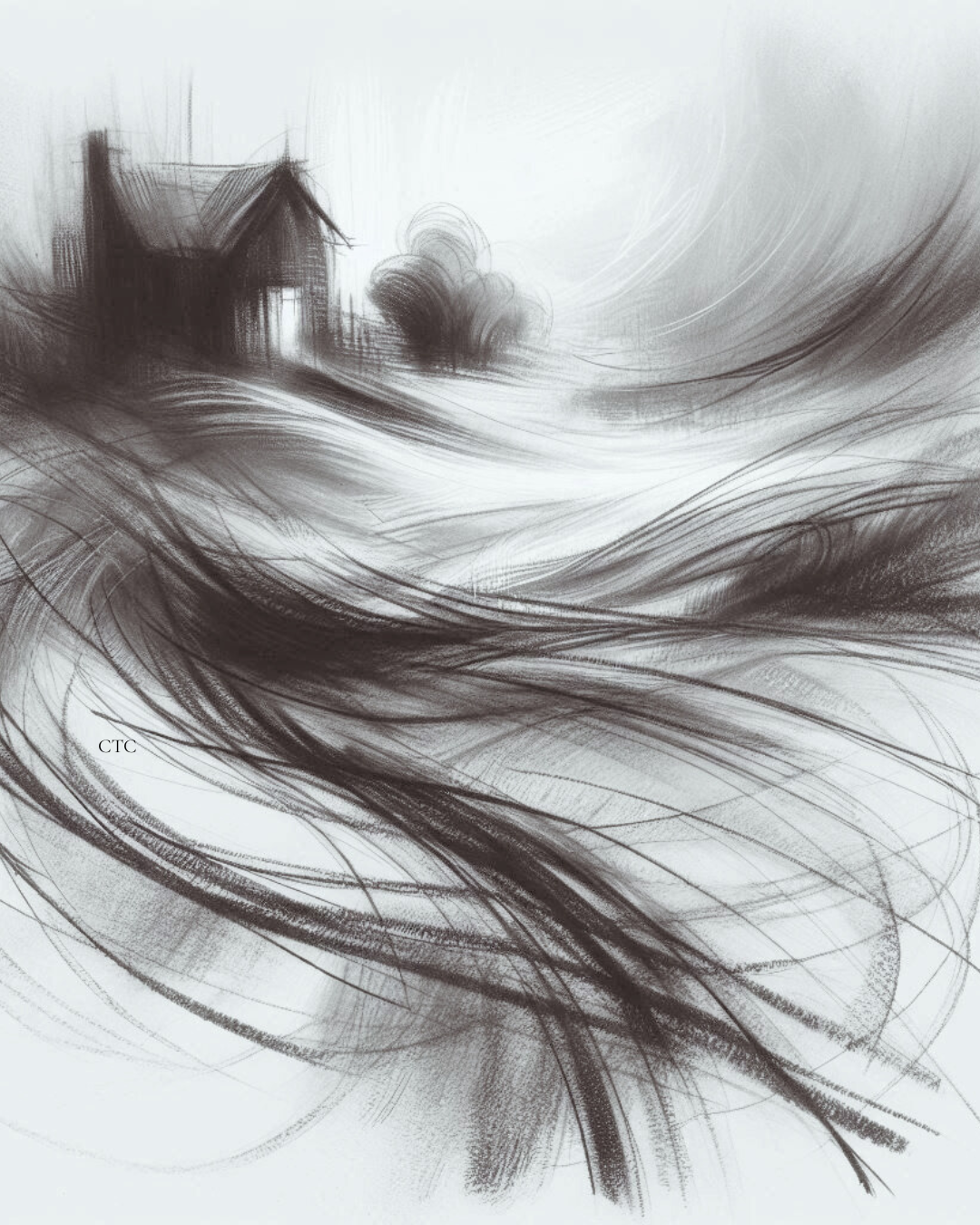
Most people assume families are held together by affection, obligation, or the occasional shared casserole. This is a pleasant idea. It is also entirely incorrect. In MirMarnia, kinship is a geographical matter. One can walk across it, trip over it, or, in unfortunate cases, accidentally rearrange it by moving the sofa three inches to the left on a Tuesday.
Kinship Cartography is the study of these invisible but entirely navigable bonds. It sits somewhere between social history, domestic philosophy, and the ability to notice when the teapot has shifted half an inch and taken everyone’s good mood with it. My colleagues at the Hearthwise Institute insist it’s a soft science. I maintain it’s simply a firm one that happens to wear comfortable slippers.
How Kinship Forms a Landscape
Every household generates its own topography. A long-standing friendship may form a gentle hill. A sibling rivalry creates a narrow ridge that must be crossed with considerable care and possibly a packed lunch. A marriage of forty years often resembles a well-trodden valley with a reliable footpath, though some contain unexpected bogs. I have mapped seven such bogs in my own extended family. No one has thanked me for this service.
These features are not metaphorical. They can be sensed by anyone with reasonably attuned domestic sensibilities. Stand in a kitchen where three generations have argued about the correct way to boil potatoes and you’ll feel the ground tilt slightly. Visit a home where someone has recently fallen in love and you may notice a warm updraft near the doorway. This is normal. The furniture wobbling is also normal, though less pleasant.
Mapping the Unseen
A Kinship Cartographer does not draw maps in the usual sense. Paper is far too flat for the purpose. Instead, we produce what are known as Hearth Charts. These are woven from thread, memory, and the faint shimmer that rises from a well-used broom. Each chart records the emotional routes that run between people, objects, and rooms.
For instance, a chart of the Rindlewick family shows a strong connection between Aunt Brissa and the pantry, which surprises no one who has encountered her emergency biscuit stash. The same chart reveals a faint but persistent link between Cousin Tarl and the upstairs landing, which he claims not to understand. I suggested he investigate this with a torch. He has not yet done so. I suspect stubbornness.
The Influence of Furniture
Furniture plays a far greater role in kinship than most people realise. A misplaced armchair can divert the flow of familial goodwill. A dining table that’s been extended too often may develop a slight resentment, which then spreads to the occupants like damp through wallpaper. This is why the Hearthwise Institute recommends a seasonal rearrangement of household objects. It keeps emotional currents fresh and prevents chairs from forming alliances.
I once observed a parlour where two sofas had developed a vendetta against each other over the course of fifteen years. No one could sit comfortably in either. The family blamed poor cushioning. In fact, the sofas simply loathed one another and made this clear through subtle enchantment. The situation resolved itself when one sofa was relegated to the attic. The other began humming contentedly within a week.
Why It Matters
Understanding kinship geography helps households avoid unnecessary quarrels. It also explains why some families thrive in small cottages whilst others require a sprawling farmhouse simply to prevent emotional congestion. In one notable case, a family of seven discovered their constant disagreements were caused not by personality differences but by a bottleneck of affection near the staircase. Once the banister was polished and the shoe rack removed, harmony returned. They still quarrel, of course, but now it’s about sensible things like who left the gate open.
A Case Study: The Incident at Bramble Cottage
I would be remiss if I did not mention the Bramble Cottage affair, though the family involved has asked me not to use their real name. I shall call them the Thornwicks, which they will recognise as insufficiently clever to be an actual alias.
The Thornwicks moved into their cottage on a mild spring morning. By teatime, the entire household was in uproar. The eldest daughter refused to sleep in her assigned room. The youngest son developed an inexplicable attachment to the pantry and would not leave it, even for meals. The mother reported feeling as though the kitchen was watching her with disapproval. The father simply went to the pub.
I was called in three days later. The hearth was cold, the air thick with unease, and someone had placed an embroidered cushion in the middle of the floor, which everyone was carefully walking around but no one would touch.
The problem, I discovered, was not the family. It was the previous occupants’ kinship map, which had been left embedded in the cottage like roots in old soil. The Thornwicks were trying to live in someone else’s emotional landscape. Every room had expectations. Every piece of furniture had opinions. The cushion, I learned, had been the centre of a bitter dispute involving two sisters and a cat. No one had resolved it. The cushion was still waiting.
I cleared the old map using a combination of salt, intention, and a strongly worded letter to the previous tenants. The Thornwicks have lived there happily for six years now. The cushion was burned. I stand by this decision.
On the Occupational Hazards
Kinship Cartography is not without its difficulties. One develops an unfortunate habit of noticing things. You can no longer visit friends without sensing the tension between the coat stand and the umbrella rack. You begin to understand why your neighbour rearranges their front room every month. You realise your own kitchen has been sulking since last November and you’re not entirely sure why.
There is also the issue of unsolicited advice. People assume that because you study kinship, you can fix theirs. You cannot. You can only point out that their dining chairs are plotting something and perhaps they should consider replacing the eldest one before it does whatever it’s planning. Most people do not find this helpful.
A Final Thought
Kinship is not a fixed terrain. It shifts with every shared meal, every quiet kindness, every argument about who last used the good scissors. Mapping it is not about control. It is about noticing the subtle ways people shape one another and the spaces they inhabit.
If you wish to begin your own study, start by observing where people naturally gather. Then watch where they avoid. Pay attention to the furniture. The rest will reveal itself in time, usually when you are trying to sweep the floor and the broom refuses to cooperate.
I have been asked if this work brings me satisfaction. It does not. It brings me understanding, which is far more useful and considerably less pleasant.