Character Spotlight: Echoes in the Bark: Tales of the Eldertree Threshold
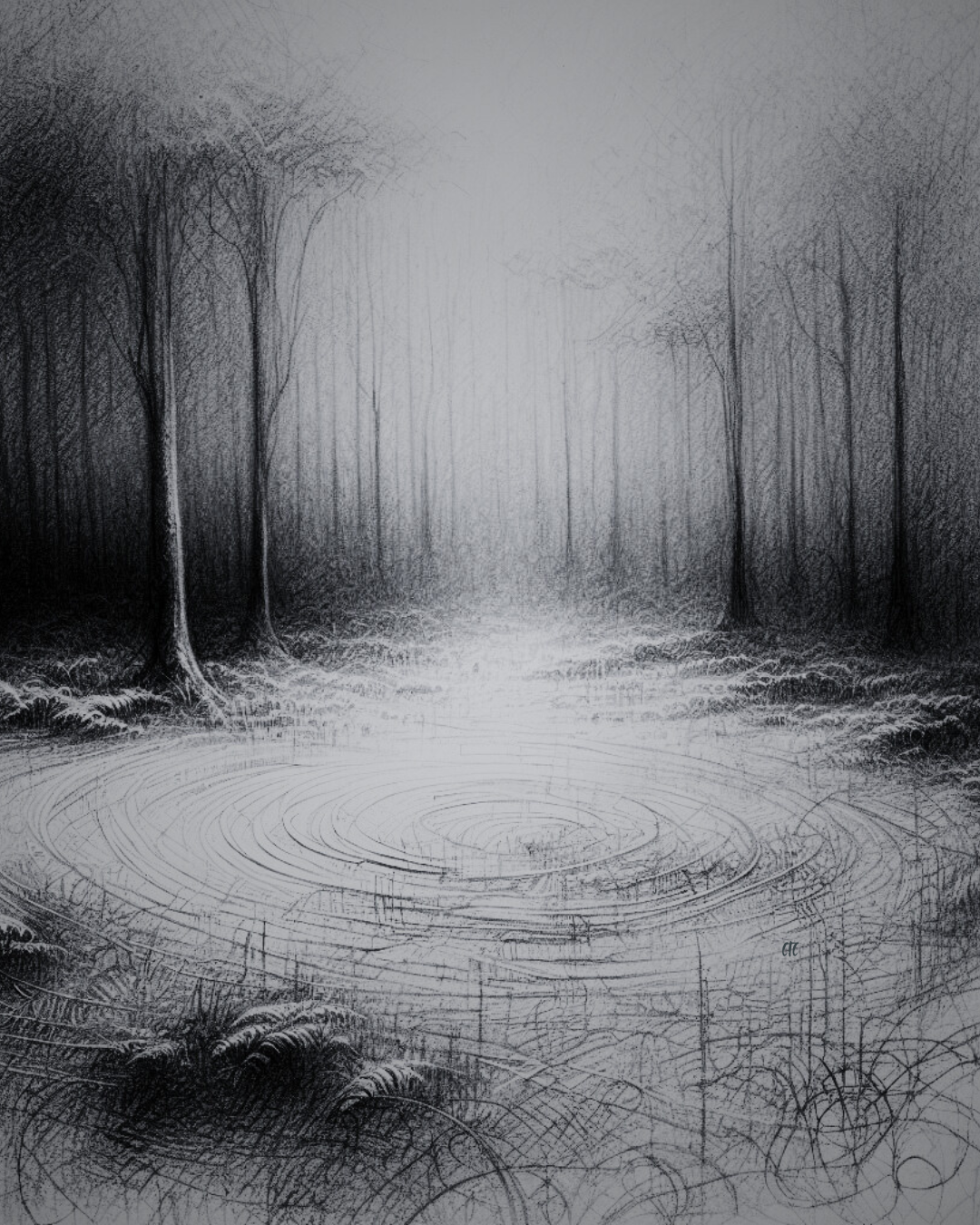
From: Echoes in the Bark: Tales of the Eldertree Threshold
By: Rowan Silvertree, Natural Historian
Entry: Irial (or A Study in Wasted Time)
I have spent three weeks in the inner groves attempting to document a figure who may not exist, may not wish to exist in any recordable fashion, or most likely, finds the entire concept of documentation deeply amusing. I am not amused.
Irial, they call him. The Root Speaker. The Listener. A dozen other names, each more vague than the last, offered by locals who smile with infuriating serenity when pressed for specifics. “Oh, Irial doesn’t come when called,” they say, as if this explains everything. “You’ll know when you’ve found him.”
Extraordinarily unhelpful.
What I have found, after considerable effort and two ruined pairs of boots, is a hollowed stump in a clearing that smells of damp earth and something else I cannot identify. Mineral, perhaps. Or very old wood. Inside, smooth stones arranged in spirals. They hum when touched, which is remarkable and worthy of study in its own right, though I suspect no one will believe me without evidence I cannot provide.
The stones aside, the dwelling shows signs of habitation. Moss grows in patterns too deliberate to be natural. The floor is swept clean, the earth packed smooth. Someone lives here. Or lived here. Or visits with enough frequency to maintain the space.
I have returned six times. The clearing is always empty.
On my fourth attempt, I encountered a woman gathering herbs near the grove. She claimed to have met Irial once, years ago, though her account was maddeningly imprecise.
“Blind, he was,” she said, fingers busy with stem and leaf. “But he looked straight through me all the same. Pale eyes, like winter water. Didn’t move much. Just sat there with his hands on the ground, listening.”
“Listening to what?”
“The roots.” She said this as if it were obvious.
I asked what the roots had to say. She gave me a look suggesting I was being deliberately obtuse.
Apparently Irial perceives the world through vibrations that travel along the Root Vein Network beneath the forest floor. Every footstep registers. Every shift in the soil. The forest, to him, is an ongoing conversation conducted in tremors and subtle movements invisible to those of us cursed with functional eyesight.
When I asked if she knew where I might find him, she shrugged. “He finds you, not the other way round.”
I am beginning to suspect this is precisely the problem.
The locals speak of Irial with a peculiar reverence, though none claim to know him well. He appears, they say, when needed. Offers fragments of wisdom that make no sense until later, when events unfold and the listener realises the meaning was there all along, cunningly disguised as nonsense.
“The root remembers what the leaf forgets,” one elderly man quoted with great solemnity.
I pointed out that this could mean anything or nothing, depending on interpretation.
He smiled. “Exactly.”
I am surrounded by people who find profundity in ambiguity. It is exhausting.
What I have pieced together, through persistence and a great deal of patience, is this:
Irial is old. How old, no one knows. Some claim he walked beyond the forest once and returned changed, as if the outside world had thinned him somehow, stripped away whatever makes a person legible to others. The forest, they say, filled the empty spaces with its own substance, and now he exists somewhere between human and something else entirely.
Others insist he never left at all. That he was shaped by the roots from the beginning, woven into the forest’s deeper knowing, and will one day dissolve back into the soil from which he came.
Both stories are impossible to verify. Neither prevents people from believing them absolutely.
I have abandoned hope of a proper interview. What I can offer instead is this: if Irial exists, he is not a figure who can be documented in any conventional sense. He does not offer guidance as a mentor might, nor prophecy as a seer would. He reveals fragments. Shifts the undercurrent of things. Those who leave his presence report a curious settling within themselves, though none can articulate what precisely has changed.
Perhaps this is the point. Perhaps Irial’s gift, if it can be called that, is teaching people to listen properly. Not to him, but to the forest itself. To the slow pulse beneath the surface, the language conducted in root and soil and the patient rhythm of growth.
Or perhaps I have wasted three weeks chasing folklore and am now attempting to justify the expense.
I am leaning towards the latter, though I confess the humming stones remain unexplained.
If you seek Irial, reader, I wish you better luck than I have had. Bring sturdy boots. Bring patience. Do not bring expectations. The forest keeps its secrets, and Irial, whether real or imagined, is one of them.
Note: I returned to the grove one final time before leaving the Eldertree Forest. The stones were gone. The moss had grown over the cleared floor. The dwelling, if it ever was one, showed no signs of recent habitation. I stood there for some time, unreasonably irritated, before noticing a single sentence scratched faintly into the bark of a nearby tree:
“The listener finds what the seeker misses.”
I have no idea what this means. I suspect that is entirely deliberate.